Complete Guide to PE Pipe Types, Applications and National Standards
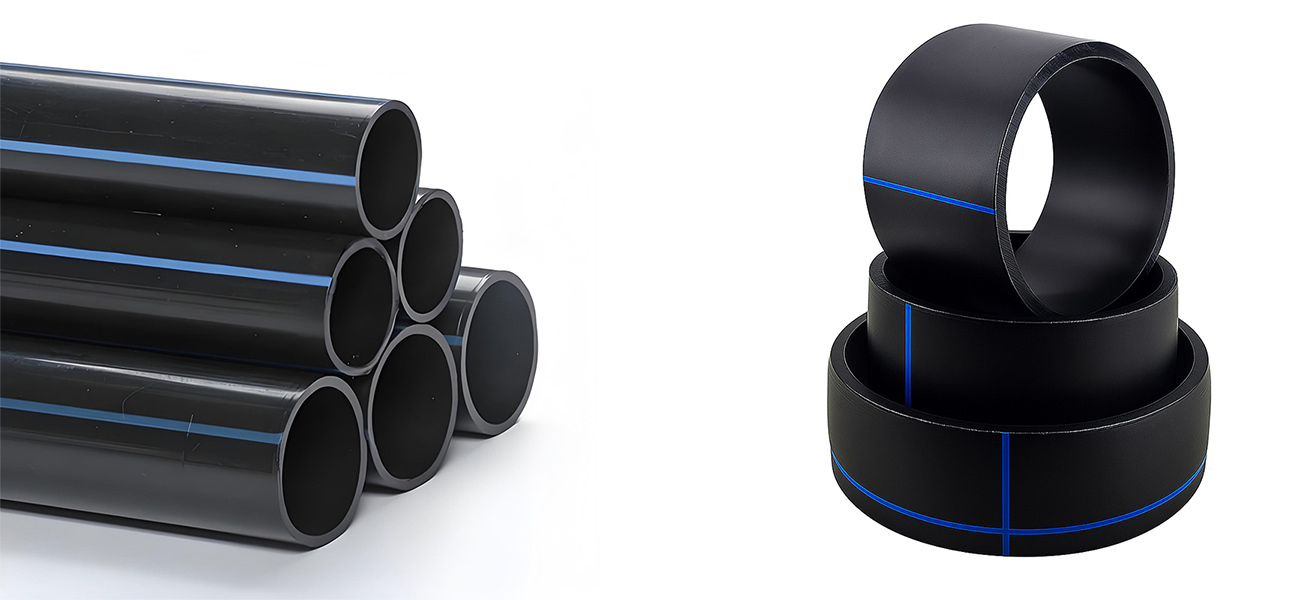
PE pipe is made primarily from polyethylene resin. The main families include HDPE pipe, PE power cable protection pipe, and PE water-supply and drainage pipe. Its strength, flexibility, abrasion resistance, corrosion resistance and non-toxic properties make it suitable for municipal and building water systems, gas networks, cable ducts, water-saving irrigation and industrial drainage.
1. HDPE silicon-core pipe
HDPE silicon-core pipe is a composite conduit with a solid silicone lubricant permanently incorporated into its inner wall. Three extruders form the layers simultaneously: high-density polyethylene provides the body and a low-friction silicone material forms the core. It is widely used in optical-fibre and communications networks.
The solid lubricating layer retains its low-friction properties, allowing cables to be installed, removed and replaced repeatedly. Because it is co-extruded uniformly into the HDPE wall, it does not peel away and has the same service life as the pipe. The core does not react with water and can be rinsed after an accident. The pipe is also flexible, with a minimum bend radius of about ten times its outside diameter.
2. PE power cable protection pipe
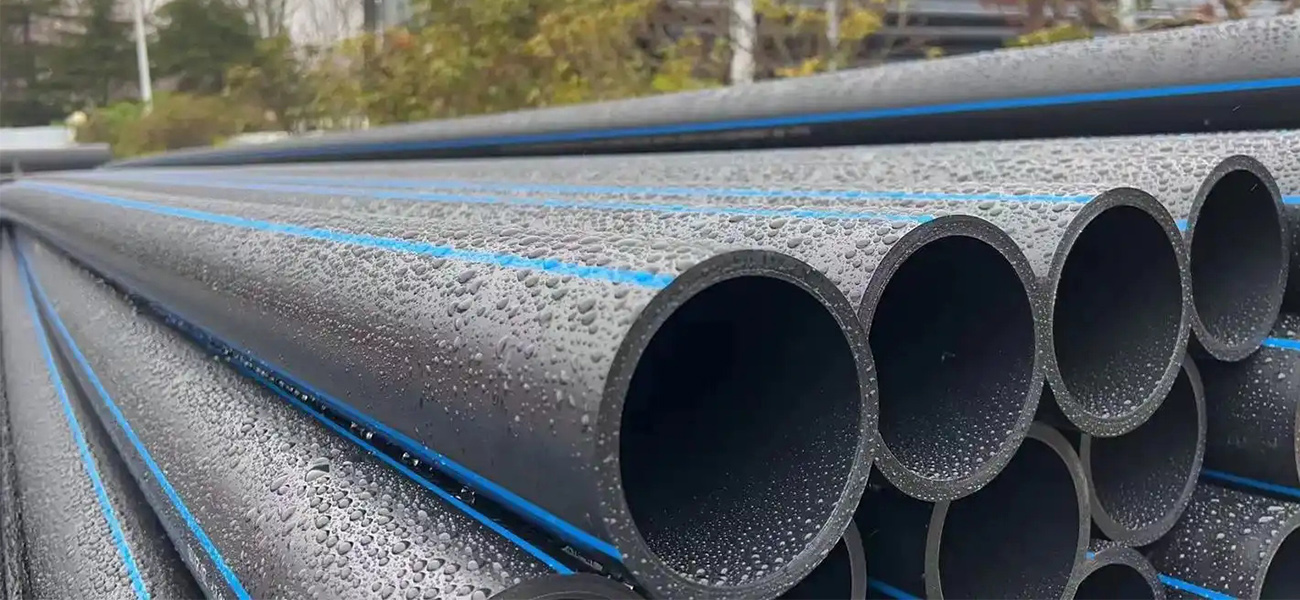
This flexible cable conduit is extruded from polyethylene with impact modifiers, stabilisers and other additives. Elongation at break can exceed 350%, while impact resistance and resistance to external pressure remain high. It tolerates modest uneven settlement without cracking and recovers well after deformation, making it adaptable to different foundations.
It is used in urban and rural trenchless horizontal directional drilling, municipal drainage and sewer works, and open-cut cable and lighting projects. The product follows the communications industry standard YD/T 841.2-2016.
3. PE water-supply and drainage pipe
PE is strong, corrosion-resistant and non-toxic. It does not rust and is therefore an ideal replacement for conventional iron water pipe. PE water pipe complies with GB/T 13663.1-2017 and GB/T 13663.2-2018, Polyethylene (PE) Piping Systems for Water Supply, Part 2: Pipes.
Except for a small number of strong oxidising agents, polyethylene resists many chemicals and does not readily support bacterial growth. Compared with steel and cast iron, plastic pipe is lighter, easier and faster to install, less resistant to water flow, economical, thermally insulating and more resistant to corrosion and microorganisms.
Polyethylene pipe has a recognised design life of more than 50 years and outstanding low-temperature performance. Its advantages support use in building and buried drainage, industrial and agricultural pipework, urban water and gas distribution, and farmland irrigation.
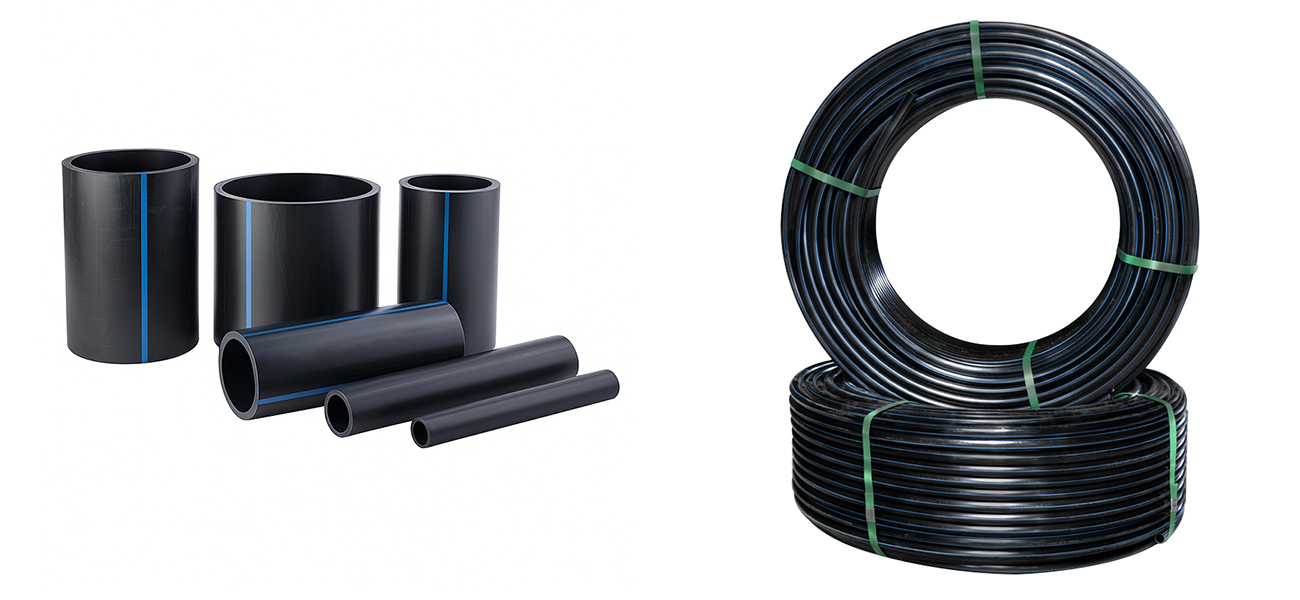
PE drainage pipe offers a long service life under its rated temperature and pressure, high toughness and impact resistance, and reliable heat-fused or electrofusion joints whose strength exceeds that of the pipe body. The light pipe and simple welding process make construction convenient and reduce total project cost.
It also provides excellent corrosion resistance against many chemical media, except certain strong oxidisers, and is not subject to electrochemical corrosion.